
Port Chester Address History by Era
Different eras leave different traces of past Port Chester households. A current assessment roll pins down the parcel identity. That anchor makes older searching safer. Recorded land instruments then carry the ownership chain backward through the property rolls, while city directories, maps, newspapers, and archival indexes help identify earlier occupants of the same street. Note the repository and date with every hit you keep. A person named in a deed did not necessarily live at the address. A person printed in a street directory was not necessarily the owner. Read each record for what it actually claims before folding it into a resident history.
| Source | Years it covers | Where held | What it shows |
|---|---|---|---|
| Town of Rye assessment roll | Current and dated roll editions | Image Mate and official rolls | Property location, SBL, owner, class, assessment, and mailing field. |
| Westchester Records Online | Online cutoff not verified in inspected official sources | WRO and County Clerk Land Records | Land, legal, and map-search leads; images and reports require account/payment. |
| County Archives deed indexes | Grantor/grantee 1680-1907; mortgagor 1680-1897 | Westchester County Archives | Older instrument-index path and research-by-mail fallback. |
| Port Chester directory runs | 1900; 1902-1932 selected runs; 1950; 1956-1959 with gaps | Library and collection repositories | Printed name and address snapshots, including reverse-directory leads. |
| Sanborn maps | 1885 and 1890; Archives series 1887-1939 with gaps | Library of Congress and County Archives | Street, lot, building footprint, and industrial context. |
| Port Chester newspapers | Journal 1868-1911; Daily Item 1918-1919 digitized runs | Digitized archive and library holdings | Notices, names, addresses, obituaries, and local events. |
For a recent Port Chester file, the municipal building record can supply a date marker. Accela holds digitized building records from February 2021 onward; earlier files are still being scanned and may require a municipal search report or a focused FOIL request.
Anchor a Port Chester Prior Household
Begin the backward trail in the Town of Rye Image Mate portal. Port Chester assessment administration runs through the Town of Rye Assessor. Record the property location, section-block-lot, owner of record, owner mailing address, property class, and roll date. The section-block-lot is the durable bridge to a deed or map. Street addresses are less stable. Lots get divided, and units get added. Older records may use an earlier street form, so the address alone can mislead a resident lookup.
The Westchester County tax parcel viewer and the Port Chester ArcGIS layer serve as the second check. The layer keeps PROPADDRESS, PROPZIP, and OWNERNAME separate from OWNERADDRESS and OWNERZIP. It also supplies the parcel polygon and print key. County GIS boundaries are approximate rather than a survey. Confirm any parcel identity in Image Mate before threading it into the historic chain.
Reach Port Chester Past Owners Through Deeds
Westchester Records Online is the remote route into County land, legal, and map records. Searching is free. Images and reports sit behind an account and payment gate. WRO itself warns that it is separate from the official record. It may contain omissions or errors. So treat an online hit as an index lead until the Westchester County Clerk's Land Records Division issues the image or certified copy your question requires.
Log each party role and instrument type. Add the recording date, document number or book and page, and legal description. Then compare that legal description and SBL to the Port Chester parcel. This guard prevents a common mistake in deed research. The mistake is assuming an owner mailing address proves two older records concern the same land. A similar street number does not prove it either.
For earlier decades, the County Archives holds the fallback. Its grantor and grantee indexes run from 1680 through 1907. A mortgagor index covers 1680 through 1897. The Archives' research-by-mail service asks for the place and the person or address. It also wants the record type and an approximate date. Fees are listed as $15 for an individual record search and $25 per hour for custom research. Copies run $0.50 per page after the first ten.
Trace Port Chester Deed Title
A chain of title works backward through recorded ownership of a Port Chester parcel. Each deed names who bought and who sold. That makes it one of the best routes to prior owners. But it will not surface every past household that lived there. Deeds track legal ownership, not residency. So renters and relatives often go unnamed in the recorder's instruments.
Begin with the current owner pulled from Image Mate or a GIS cross-check. Then search that owner as grantee in WRO. Open or request the purchase instrument. Take the seller's name as your next earlier grantee search. Repeat the climb, but only after the legal description and parcel identifier line up with the assessor's rolls.
- Copy the current Port Chester property location, SBL, owner of record, and legal-description lead from assessment and parcel records.
- Find the current owner as grantee in WRO and save the recording reference, party role, and instrument type.
- Read the deed image or obtain a Clerk copy to identify the prior grantor and the deed it references.
- Search that prior owner as grantee, then repeat the comparison against the SBL and legal description.
- Move to County Archives indexes when the earlier Port Chester instrument falls in the 1680-1907 grantor/grantee coverage.
- Grantor
- The party conveying an interest in a recorded instrument.
- Grantee
- The party receiving that interest. A grantee search can lead to a purchase deed.
- Chain of title
- The sequence of recorded transfers tied to the parcel or legal description.
- Legal description
- The land description in a recorded document. It is often more reliable than a historic street address.
Read Port Chester Address History on Maps
Maps test an old question. Has a Port Chester address meant the same building or lot across the years? The 1890 Library of Congress Sanborn item spans seven sheets. The 1885 Port Chester item has five. County Archives Series 316 describes Sanborn maps and atlases from 1887 through 1939. Some gaps appear in that span. Expect building footprints, construction or use, nearby streets, and industrial context. These maps are not deed evidence or an occupancy roll.
Read a map sheet alongside the legal description, parcel shape, and a directory year. The comparison earns its keep along the river, rail, and former industrial parts of Port Chester. A modern property class may not match an earlier footprint there. A map explains place and change. It cannot place a person at the address.
Search Port Chester Past Households by Old Names
Old Port Chester records may sit under a different place label. The town lines of Rye date to 1788. The Saw Pit renaming came in 1837. The railroad arrived in 1849. Village incorporation followed in 1868. Printed directories and newspapers may carry headings such as Port Chester/Rye, East Port Chester, Byram, Greenwich, Rye, or Cos Cob. Check the heading that fits the edition before concluding a name is missing.
No official street renumbering or renaming schedule for Port Chester exists. Instead of forcing a conversion, lay an old house number beside the current SBL, the legal description, a Sanborn sheet, a newspaper notice, and a map. That keeps the doubt visible. It shows when an old street line or lot fails to line up with its modern counterpart.
Find Port Chester Households in Newspapers
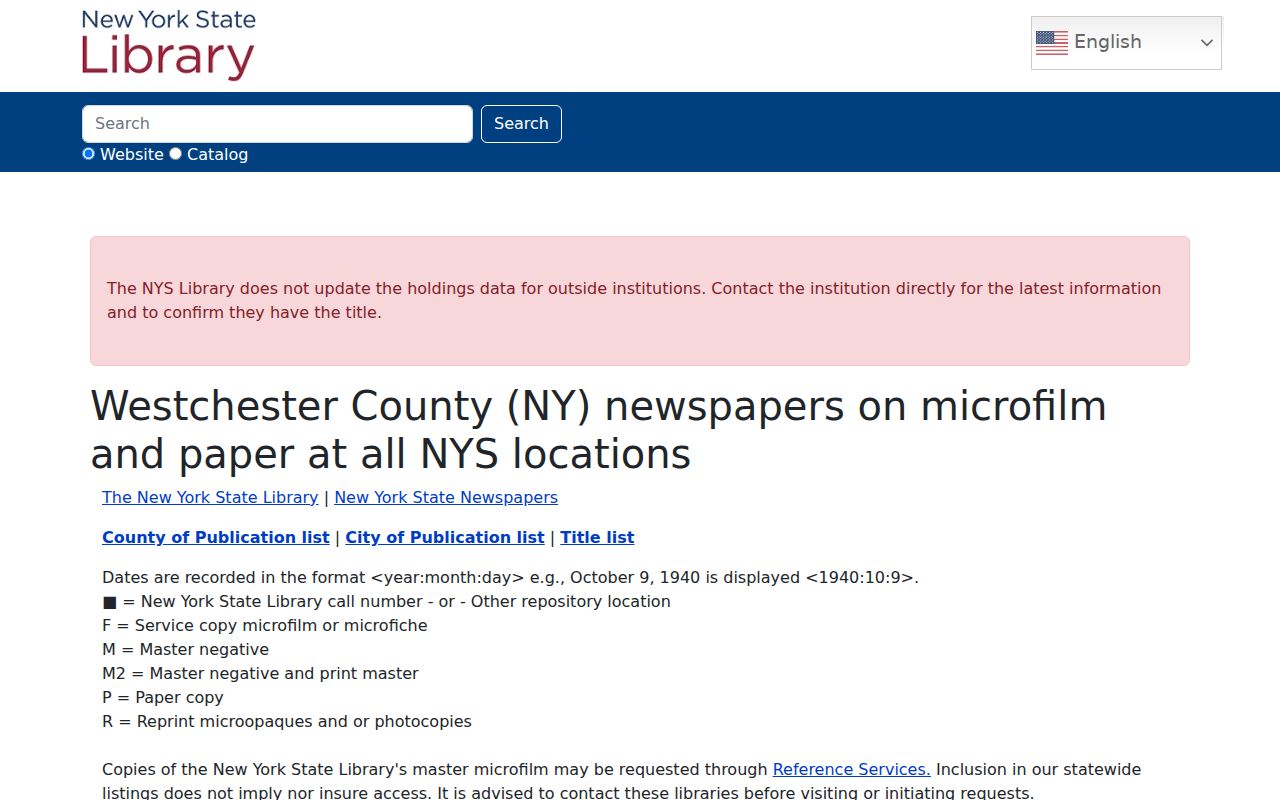
Start with the New York State Library Port Chester newspaper holdings, which list microfilm runs for the Port Chester Journal and the Port Chester Daily Item at nearby repositories. The digitized Port Chester Journal archive adds Journal scans covering 1868 through 1911, plus Daily Item scans from 1918 through 1919. Search by surname, address, business name, or a dated event. Record the newspaper title, issue date, and page with every hit.
A newspaper reference can point toward a notice near a sale, a move, a death, or a civic event. Treat each item as a lead. Read the full article and date in context, and keep the parcel and deed trail as the backbone.
Pair Port Chester Past Households With Directories
Ownership tells only part of a Port Chester address story. A printed directory fixes a name at an address for its edition date, and census or newspaper material can round out the household picture. The directory trail here includes a 1900 Port Chester or Port Chester and Rye baseline, holdings from 1902 through 1909 and 1910 through 1932, Polk's 1928/29 and 1932 listings, and later 1950 and 1956 through 1959 reels with gaps. Note the publisher, the place heading, the edition year, the page, and the repository each time.
- Choose the Port Chester directory edition closest to the transfer or event date in the deed chain.
- Transcribe the printed name, number, street, page, publisher, and the volume’s place heading.
- Check a reverse or criss-cross section when the volume provides one, then look at the next available edition for a change.
- Pair that dated name-address result with the relevant WCHS census holdings, which include census material through 1930, or with a contemporary newspaper notice.
- Mark a match as a dated household clue, not as proof of ownership or every person at the address.
Collection-level routes and publisher details appear in the Port Chester Directory Book. The Port Chester-Rye Brook Public Library can also route a request to local history holdings, Westmore News, and the Westchester Library System catalog.
Extend Port Chester Family Trails With Archives
A past Port Chester household can drop out of a directory. The family-history layer offers another route when that happens. The Westchester County Historical Society shares quarters with the County Archives in Elmsford. Its holdings cover family histories and cemetery volumes with a surname index. They also hold church records, newspaper marriage and death listings, genealogy files, and local historical material. A Port Chester-area cemetery index can open the door to a church record. It can also lead to a family file, an obituary, or a wider newspaper search.
None of these collections substitutes for a certificate. WCHS cautions that its notices may be typed transcripts drawn from varied sources. Keep the index citation, and push on to the newspaper, church, or official certificate route when verification matters. The Archives reading room asks for photo ID and uses call slips. Advance contact is wise for Port Chester material.
Note: County Archives and WCHS serve different research roles. Ask whether the item you need is an official county record, an archival index, or a historical-society collection.
Limit a Port Chester Address-History Search
Keep prior ownership and prior occupancy separate in any Port Chester past-resident search. A deed records conveyances. An assessment roll shows a dated owner-of-record field. Directories, census pages, maps, and newspapers supply historical clues. Every clue needs a source date. It also needs a second check. An absent name never proves a person was absent. Confidentiality protections, scan gaps, catalog gaps, or place-label differences may explain the result.
New York's Address Confidentiality Program and confidential voter registration call for special care. If a source hints at protected information, stop. Refer the question to the proper custodian rather than combining records to infer an address.